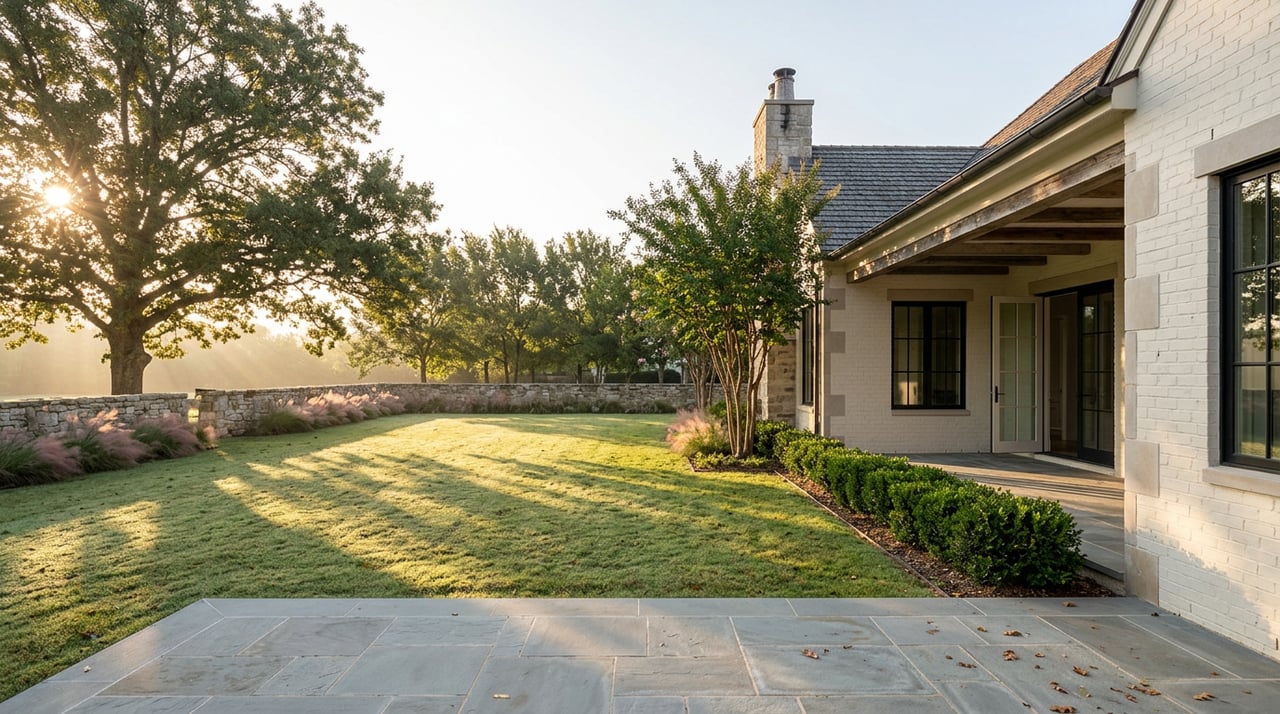
Bent Tree Country Club Reopening Completes 4-Year Rebuild
Bent Tree Country Club in Far North Dallas completes its multi-year capital transformation in Fall 2026 with the reopening of its 18-hole golf course. The $32.5 million master renovation, designed by Beau Welling, follows a new 65,000-square-foot clubhouse and upgraded racquets facility serving the 200-acre master-planned neighborhood.
Project Phase | Completion Date | Facility Scope & Details | Impact on Bent Tree Neighborhood |
|---|---|---|---|
Phase 1: Clubhouse Rebuild | 2021 to 2022 | 65,000 sq ft clubhouse with formal/casual dining, golf shop, and member lounges | Elevated social dining and community event capacity. |
Phase 2: Racquets Center | 2023 | Full overhaul of indoor/outdoor tennis courts and new pickleball facilities | Expanded racquets program under Director Chris Gale. |
Phase 3: Golf Course Redesign | 2025 to 2026 | $32.5M tee-to-green redesign by Beau Welling across 200 acres | Restored fairway views along Club Hill Drive and Westgrove Drive. |
Phase 4: Fall Reopening | Fall 2026 | 18-hole course reopens for member play and fall tournament schedule | Completes full 4-year master plan capital project. |
Searching for Homes Along Bent Tree Country Club Golf Course?
Explore luxury residences backing to newly renovated fairways in Far North Dallas.
View Bent Tree Homes for SaleSpeak with a Bent Tree Specialist
Four-Year Rebuild Timeline and Sequence
Along Westgrove Drive, construction fencing framing the back nine at Bent Tree Country Club is coming down. The reopening completes a systematic transformation initiated in 2021:
- Phase 1 (2021 to 2022): Construction of a 65,000-square-foot clubhouse replacing the original 1972 facility. The building features formal and casual dining, private event rooms, a full golf shop, and men's and women's member lounges.
- Phase 2 (2023): Overhaul of the racquets complex under Director Chris Gale, introducing upgraded tennis courts and dedicated pickleball facilities.
- Phase 3 (2025 to 2026): Comprehensive $32.5 million tee-to-green golf course redesign that took the 18-hole layout offline for a full growing season.
The History of Bent Tree Country Club
Bent Tree Country Club opened in 1972 under the leadership of former Dallas Mayor Robert S. Folsom. Original architect Desmond Muirhead laid out the 18-hole course across 200 acres north of LBJ Freeway, along land that historically served as part of the Shawnee Trail.
Unlike suburban developments where golf courses were added post-construction, Bent Tree was master-planned so homes along Club Hill Drive and Westgrove Drive wrapped directly around the fairways. The club has hosted major professional competitions, including LPGA and PGA Senior Tour events such as the LPGA Mary Kay Classic.
The $32.5 Million Redesign by Architect Beau Welling
The $32.5 million course redesign was led by golf course architect Beau Welling, known for his work on PGA Frisco's Fields Ranch West course. Welling's design team balanced Desmond Muirhead's original 1972 routing with updated drainage systems, strategic bunker reshaping, and modern turfgrass varieties.
Data Source: Bent Tree Country Club Architectural Master Plan and City of Dallas Property Records.
Neighborhood Impact for Bent Tree Residents
Bent Tree Country Club operates as a private, invitation-only institution. While membership rules remain unchanged, the reopening delivers immediate aesthetic and property value benefits to neighboring homeowners along Club Hill Drive, Westgrove Drive, and surrounding streets.
The completion of the course aligns with active community programming led by the Bent Tree North HOA, including annual spring events, neighborhood social clubs, and fall gatherings. Nearby communities, including Preston Trail, Glen Abbey, and Cambridge, share in this Far North Dallas real estate corridor milestone.
Related Reading: Explore our local neighborhood analysis on Choosing the Right Neighborhood in Far North Dallas and our guide to Far North Dallas Dining and Country Club Destinations.
About the Author & Editorial Team: Valerie Bracchi is the founder and Lead Agent of The Bracchi Group at Compass. Specializing in Far North Dallas luxury real estate, Valerie offers specialized expertise in golf course properties surrounding Bent Tree Country Club, Preston Trail, and Glen Abbey.
Frequently Asked Questions About Bent Tree Country Club Reopening
When is Bent Tree Country Club reopening its golf course?
The golf course at Bent Tree Country Club reopens in Fall 2026 following a year-long, $32.5 million complete tee-to-green redesign by architect Beau Welling.
Who designed the new golf course at Bent Tree Country Club?
The redesign was executed by Beau Welling, principal planner of PGA Frisco's Fields Ranch West course, preserving Desmond Muirhead's original 1972 layout while modernizing condition standards.
Is Bent Tree Country Club open to the public?
No, Bent Tree Country Club is an invitation-only private country club located in Far North Dallas, serving its private membership and surrounding homeowners.